


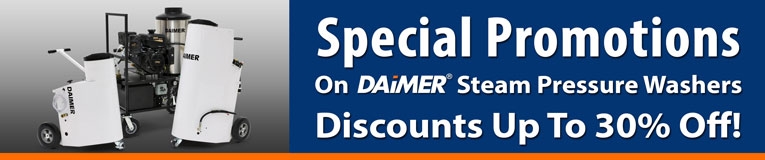





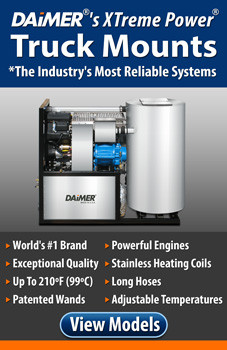
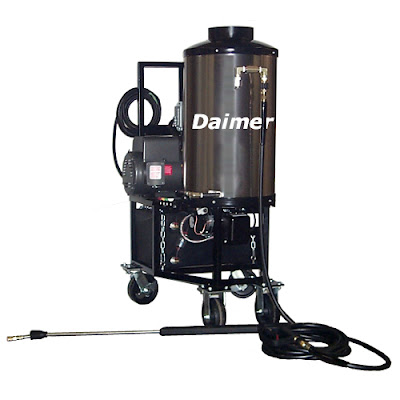
To select the best pressure washer, the user must have a basic understanding of parts. The motor or engine is the most important part of a pressure washer, as it powers the entire machine. Daimer®’s electric motors are powerful NEMA certified devices, which guarantees energy efficiency and optimal functioning. Pressure washers using gasoline or propane, instead of electricity, have powerful engines up to 20 HP for heavy duty outdoor cleaning applications.
Pressure washers using heat rely on the quality of the heating device to determine how long the machine will last and how well the machine will function. Most home use machines use aluminum heating coils, which cannot withstand high temperatures for too long. In contrast, Daimer® machines have stainless steel heat exchange coils or schedule 80 heating coils, which enable quick heating and continuous operation.
The trigger gun and wand are crucial to apply water to the surface. A trigger wand with an easy disconnect option increases functionality. Additionally productivity enhancement comes from Daimer's unique AST® Automatic Shutoff Technology™. Electric models with AST® shut down the motor and pump after 30 seconds of inactivity to reduce wear on the machine. Not only does this prolong the life of the machine, it also makes it easier for users who work at a distance from the machine to take a break without constantly returning to the unit to switch it on and off.
Pay attention to the type of nozzle when you purchase pressure washers. The angle of the nozzle's opening is an important factor in the cleaning process. Daimer® pressure washing machines have nozzles that blast water out at 15°, 25°, and 40°. A specialized steam nozzle is also available. Hoses need to be long enough for convenient cleaning without requiring one to move the machine frequently.
Pressure washers using heat rely on the quality of the heating device to determine how long the machine will last and how well the machine will function. Most home use machines use aluminum heating coils, which cannot withstand high temperatures for too long. In contrast, Daimer® machines have stainless steel heat exchange coils or schedule 80 heating coils, which enable quick heating and continuous operation.
The trigger gun and wand are crucial to apply water to the surface. A trigger wand with an easy disconnect option increases functionality. Additionally productivity enhancement comes from Daimer's unique AST® Automatic Shutoff Technology™. Electric models with AST® shut down the motor and pump after 30 seconds of inactivity to reduce wear on the machine. Not only does this prolong the life of the machine, it also makes it easier for users who work at a distance from the machine to take a break without constantly returning to the unit to switch it on and off.
Pay attention to the type of nozzle when you purchase pressure washers. The angle of the nozzle's opening is an important factor in the cleaning process. Daimer® pressure washing machines have nozzles that blast water out at 15°, 25°, and 40°. A specialized steam nozzle is also available. Hoses need to be long enough for convenient cleaning without requiring one to move the machine frequently.


